Five bar types get squatted with, and the difference between them is where the load sits: on your upper back and held by your hands (the straight bars), on your shoulders but off your hands (the safety squat bar), at your sides (the trap bar), or hanging below the shaft and swinging (the cambered bar). Everything else — knurl, finish, capacity — is detail by comparison. Move the load, and you change which muscles fail first, how upright you stay, and whether your shoulders can tolerate the position at all.
If you are buying your first bar, the answer is in the next paragraph and you can stop reading after it. If you already own a straight bar and are trying to work out which specialty bar earns the floor space, the table and the sections below are the decision. Prices on every pick are live as of October 28, 2026.
Buy a straight bar first.It is the bar every program is written for, it racks in everything, and it is also your pressing, pulling and rowing bar. A specialty bar is a second purchase that solves a specific problem — and if you cannot name the problem, you do not need the bar yet.
The five bars, side by side
1. The all-purpose Olympic bar
A 28 mm shaft, dual knurl marks, usually no center knurl, and enough whip to be pleasant on cleans. This is the bar most home gyms own, and for good reason: it squats well, presses well, deadlifts well and cleans well, without being the best bar for any one of those. If you own exactly one barbell, it should probably be this.
Its limitation under a squat is stiffness. A thinner shaft flexes more, and under a heavy squat that flex turns into oscillation on your back — not dangerous, but distracting at the top of a grinding single. 28 mm vs 29 mm covers the difference properly, and barbell whip explained covers why whip is a feature on a clean and a nuisance on a squat. If your room is tight enough that bar length is part of the decision, 6 ft vs 7 ft barbell has the published spans.
2. The straight power bar
29 mm, stiff, center knurl, aggressive bite.This is the bar built for the squat specifically — the extra millimeter of shaft diameter makes it noticeably stiffer, the center knurl grips your shirt so the bar stays put on a sweaty back under a maximum, and the knurl pattern is cut deeper because a 600 lb bar has to stay in your hands. A deep knurl works best with chalk on it, which costs a few dollars a year.
Two honest downsides. The center knurl that keeps the bar planted will also scrape your neck in a high-bar position — center knurl explained goes through who should want one. And the stiffness that helps a squat does nothing for an Olympic lifter, who wants the opposite. If you squat and deadlift heavy and do not clean, a power bar is the right single bar; otherwise it is the specialist.
3. The safety squat bar
A padded yoke that rests on your shoulders with handles sticking forward, so your hands never go behind you. That single change is why this bar exists: the straight-bar rack position is a shoulder, elbow and wrist mobility test before it is a leg exercise, and plenty of lifters fail that test long before their legs are the limit.
The camber also shifts the load slightly forward of your mid-foot, which drives your torso more upright and makes your upper back work hard to stay there. Most lifters squat meaningfully less with an SSB than with a straight bar, and that is the training effect rather than a flaw. The forward handles make bailing a failed rep simpler too, which matters if you squat alone. Start with is a safety squat bar worth it and safety squat bar vs barbell.
4. The trap bar
A hex frame you stand inside, with neutral handles at your sides. Nothing touches your back at all, which makes it the bar for a lifter who cannot load their spine in a bar-on-back position, and the easiest bar on this page to teach to a beginner.
Be clear about what it is, though. A trap bar squat sits somewhere between a squat and a deadlift, and exactly where depends on your handle height and setup — high vs low handles changes the movement significantly. It does not train the braced-trunk, bar-on-back position a back squat does, so it is a substitute in the sense that a rowing machine substitutes for running. Can you squat with a trap bar works through it, and safety squat bar vs trap bar is the direct comparison if you are choosing between these two.
5. The cambered bar
The specialist. The load hangs well below the shaft on a deeply cambered frame, so the weight swings as you move and your trunk has to fight the oscillation the whole way. It is brutally effective for lifters whose squat stalls out of the bottom, and it is the least useful bar here for everyone else.
Practically, it is also the hardest of the five to buy: almost nobody sells a cambered bar on Amazon, so the registry we rank from has none and we are not going to invent a pick to fill the slot. Cambered bar explained covers what it does and why the brand-direct market is where you will find one.
Three bars that cover four of the five types
A straight power bar, a safety squat bar and a trap bar — between them, every squat variation on this page except the cambered bar. Prices live as of October 28, 2026.
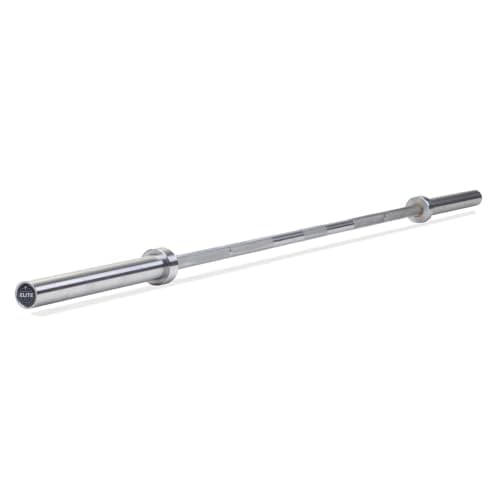
Titan Fitness Elite Series Power Barbell
A 29mm, 2,000 lb-rated power bar with brass bushings and aggressive mountain knurl — a genuine power-bar spec sheet at roughly a third of a boutique bar's price.
#ad · Price as of October 28, 2026 · Affiliate disclosure
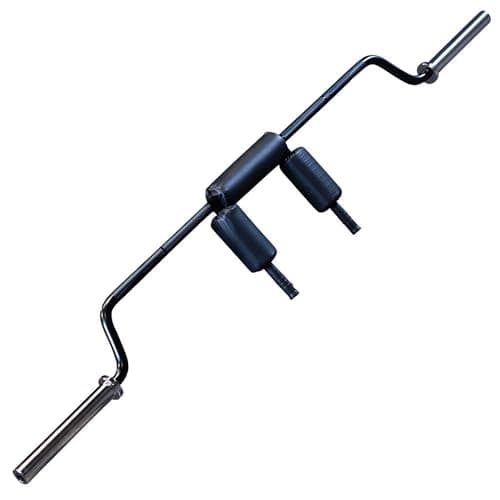
Body-Solid Safety Squat Bar
A 1,000 lb-rated safety-squat bar from an established commercial brand, with built-in shoulder padding and forward handgrips — the pick if you want an SSB you'll never worry about.
#ad · Price as of October 28, 2026 · Affiliate disclosure
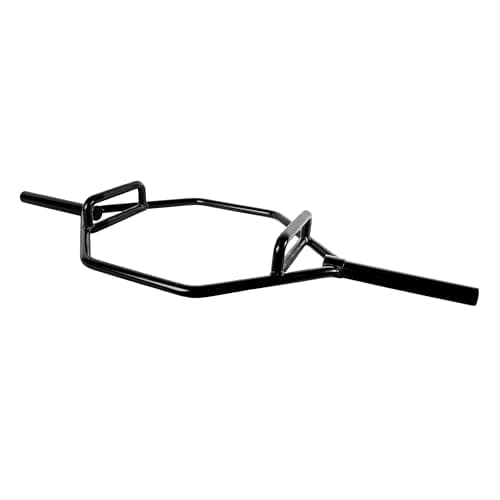
CAP Olympic Trap Bar (Thick Combo Grip, 1,000 lb)
A 1,000 lb-rated hex bar with 32 mm dual-height combo handles knurled at both positions — the most capable trap bar on this list, and the one to buy if you want one bar to cover every pull.
#ad · Price as of October 28, 2026 · Affiliate disclosure
The Titan Eliteis the straight bar to buy if the squat is the lift you care about: 29 mm, 2,000 lb rated, brass bushings and an aggressive mountain knurl with a center knurl. The Body-Solid SSBis the shoulder-friendly option from a commercial brand, rated 1,000 lb with built-in shoulder and neck padding. The CAP combo-grip trap baris the one to stand inside — 1,000 lb rated with 32 mm dual-height handles knurled at both positions. Full rankings in best barbell for squats, best safety squat bar and best trap bar.
The order to buy them in
- A straight bar.Power bar if you squat and pull heavy and do not clean; all-purpose 28 mm bar if you do a bit of everything. What barbell should I buy settles that fork.
- The bar that solves your problem. Shoulders that hurt in the rack position point to a safety squat bar. A back that cannot be loaded points to a trap bar. No problem at all points to more plates instead.
- A cambered bar, eventually. Only once you have a specific weakness out of the hole to attack, and only brand-direct.
And the honest ceiling on all of this: a specialty bar is a tool, not an upgrade. Three bars in a home gym is plenty, and most lifters get further by loading the straight bar properly than by owning a fourth one.